


BYD Partners with European Banks for EV Push
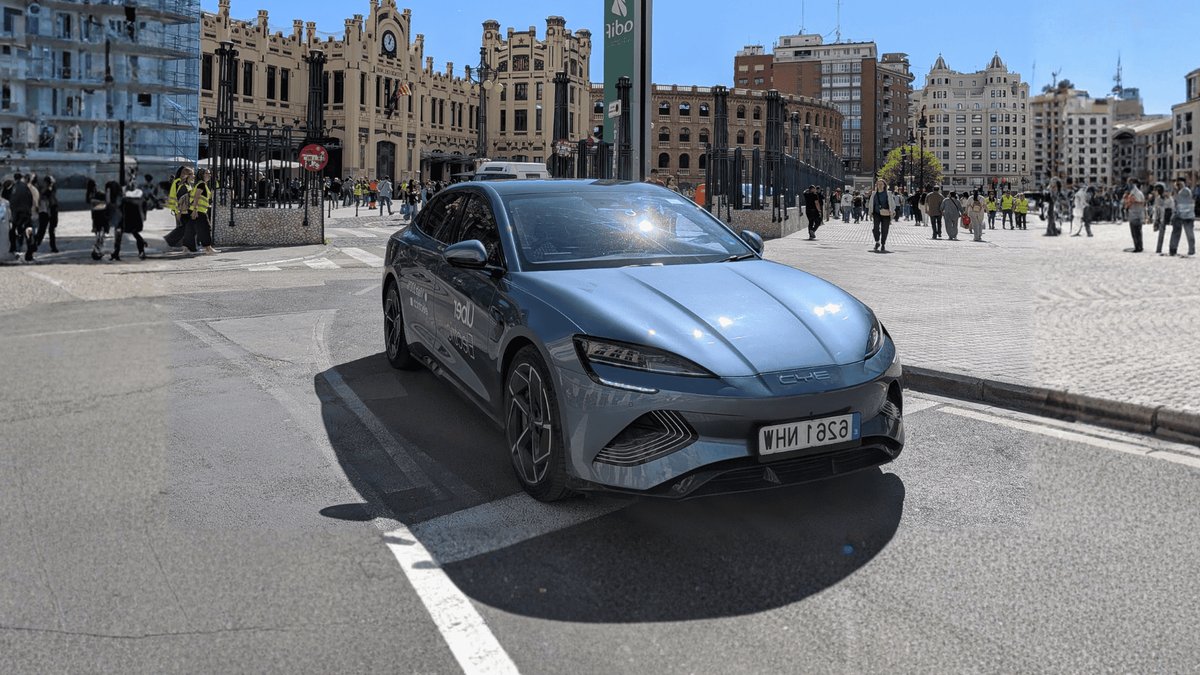
Walk through the streets of Valencia or Paris, and the shift in transportation is hard to miss. The logos dominating ride-hailing fleets and private vehicle lanes increasingly belong to BYD. The Chinese automaker is expanding rapidly across Europe, but this surge is not driven solely by vehicle design or aggressive pricing. The primary engine behind this growth is financial engineering.
BYD’s electric vehicle sales jumped roughly 270% across Europe last year. In the first quarter of 2026, sales increased by another 156%. While these figures grab headlines, they obscure the specific mechanism financing the expansion. BYD has not entered Europe by building a traditional captive-finance arm from scratch. Instead, the company plugged directly into the continent’s existing banking and leasing infrastructure.
Financing Without the Balance Sheet
This approach allows BYD to achieve the reach of a legacy automaker without the burden of holding assets on its own balance sheet. The company treats Europe’s financial system as a distribution engine, turning vehicles into financeable assets for third parties. European banks and auto-finance platforms provide the underlying credit, while leasing firms structure contracts and manage residual-value assumptions.
Traditional automakers spent decades building these capabilities in-house. “European OEMs [original equipment manufacturers] built their captive finance arms over 30 to 40 years, and those businesses now function as profit centers,” says Stefan Bratzel, founder and executive director of the Center of Automotive Management. “BYD cannot replicate this overnight, nor does it try to.”
Related: Workforce Shift or Talent Shortage?
Instead, the company is partnering with established asset finance providers. “BYD gains speed to market at the cost of margin while it accumulates the balance sheet and regulatory standing to eventually internalize these functions,” Bratzel says.
This strategy represents a significant compression of the standard industry timeline. Legacy companies were forced to organically grow their financial backing over generations, absorbing regulatory hurdles and market shifts as they went. BYD is effectively renting that established infrastructure to bypass the growing pains, betting that volume today outweighs the lower margins of tomorrow.
For lenders, the arrangement offers a pipeline of assets that generate predictable cash flow. In a market where electrification is a major policy priority, high-volume EV programs provide a steady stream of business for banks willing to underwrite the risk.
Questions Behind the Numbers
The speed of this expansion has led analysts to scrutinize the sales data more closely. Matthias Schmidt, an independent analyst tracking the European auto market, points to a discrepancy in Germany. Out of more than 30,472 BYD models registered there since market entry in December 2022, only 18,536 are currently on the road.
Related: Innovating Healthcare Solutions
“After models have been registered, they are then being exported to other European markets as used-car inventory or are going back into used-car inventory in Germany,” Schmidt says. He suggests this could be a strategy to make performance look better in Europe’s largest market than it actually is—a practice he refers to as “window-dressing the data.”
In a system driven by leasing and fleet placements, this gap is not unusual. Vehicles can be registered into the channel before reaching long-term ownership, then repositioned through resale or export. For financial stakeholders, the distinction matters: registrations may signal momentum, but they do not always show sustained demand. It is a somewhat complex equation to solve when evaluating true market penetration.
The Long-Term Risk
The institutions funding this expansion are focused less on immediate speed and more on long-term asset performance. Residual value assumptions underpin the economics of leasing. If vehicles retain value, the system works efficiently. If they do not, the economics tighten quickly.
“The EV residual value question is the single biggest structural challenge in automotive finance right now,” Bratzel says. “Whoever solves that problem credibly — either through data, scale, or balance sheet — will have a significant structural advantage.”
Related: China Q4 Growth Slows to 4.5% Meeting Target
BYD’s advantage may lie in its vertical integration. Unlike many automakers that rely on third-party suppliers, BYD produces its own battery cells and key components. This control provides clearer visibility into battery performance over time, which is arguably the most important variable in determining how an electric vehicle depreciates.
The geographic distribution of this growth also adds complexity. Roughly 70% of Chinese EV registrations in Western Europe in the first quarter of this year were concentrated in Spain, Italy, and the U.K. These markets tend to be more price-sensitive and open to new entrants, suggesting that location-dependent finance trends are driving the expansion as much as consumer demand.
Over the next two to three years, vehicles deployed today will cycle back through the system via lease returns and secondary markets. That cycle will test the assumptions anchoring today’s financial models. If BYD’s vehicles hold their value, the partner-led model will look like a success. If residual values weaken, the financing engine that built the company’s presence could become a constraint.

Workforce Shift or Talent Shortage?


